Names Around the World
How this spice is known in major languages
Botanical Information
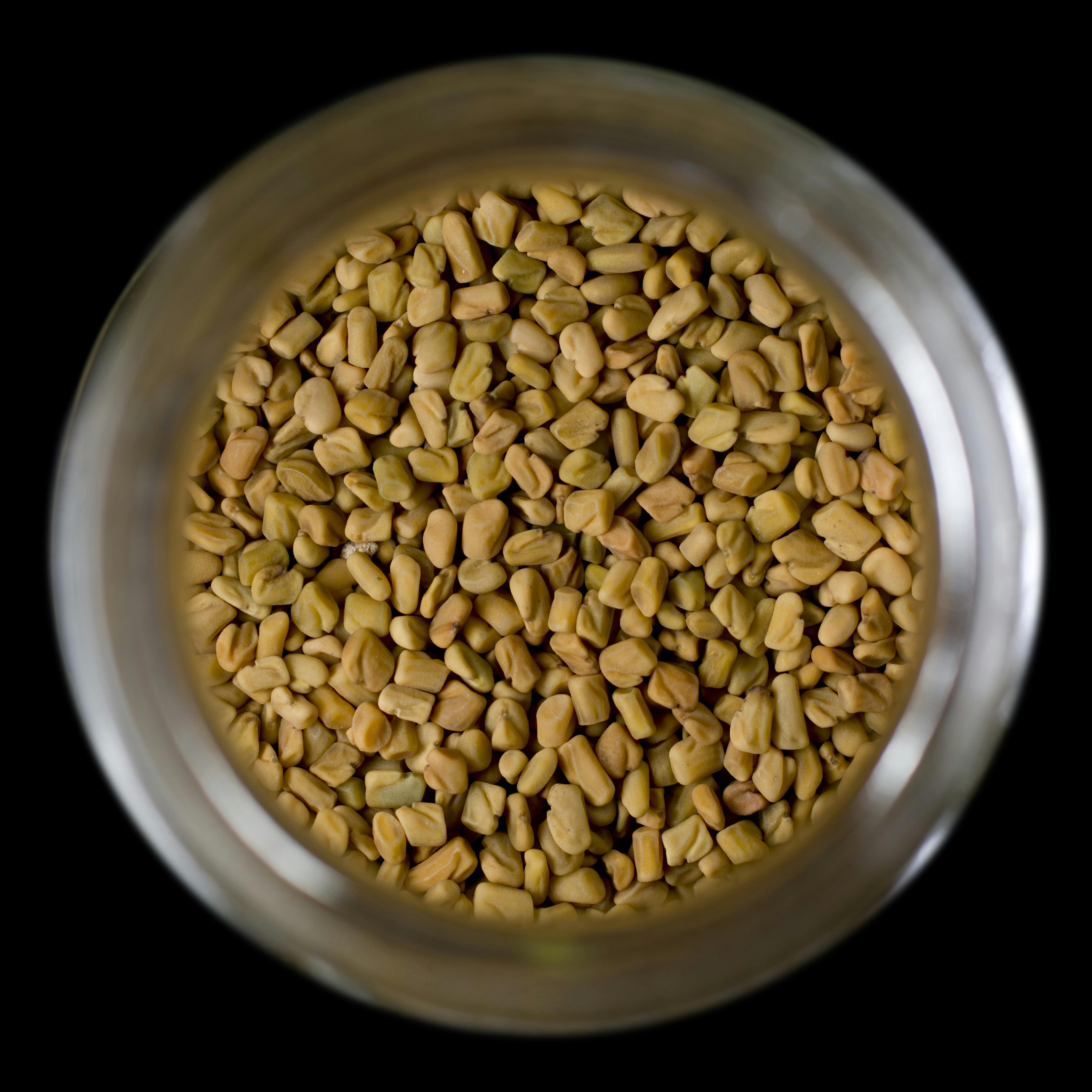
Fenugreek is an annual legume with trifoliate leaves and small yellow-white flowers. Pods hold 10-20 small, hard, golden seeds with a strong maple-syrup-like aroma (from sotolon). Both the leaves (methi saag) and seeds are used.
Origin & History
One of the oldest cultivated plants — fenugreek seeds were found in Iraqi sites from 4,000 BCE and Egyptian tombs from 1,500 BCE. The name 'foenum-graecum' means 'Greek hay' — Romans used it as cattle fodder.
Nutritional Profile
Per 100g
Key nutrients: Outstanding protein content for a spice. Rich in iron, manganese, magnesium, and 4-hydroxyisoleucine (insulin enhancer).
Evidence-Based Health Benefits
Strong evidence — 5-10g daily seeds reduces fasting glucose and HbA1c in type 2 diabetics.
Galactagogue effect — increases breast milk supply within 24-72 hours in studies.
Soluble fiber binds bile acids; meta-analyses show 7-13% LDL reduction.
Trigonelline supports testosterone in men; trials show improved libido and strength.
Saponins reduce inflammation markers in arthritis.
Methika is heating (Ushna), pungent-bitter, balances Vata and Kapha. Used for diabetes (Madhumeha), arthritis, lactation, and as a 'Vrishya' (aphrodisiac). Postpartum mothers across India eat methi laddoos for recovery.
Recipes Featuring This Spice
Potatoes sautéed with fresh fenugreek leaves, cumin, and chili.
Gujarati flatbreads with fenugreek leaves and spices.
Soaked seeds for morning blood-sugar control.
Safety & Precautions
5-10g seeds (1-2 tsp) daily for therapeutic effect; 1-2 tsp ground in cooking.
Strong maple-syrup body odor (harmless). May lower blood sugar dangerously with diabetes meds. Pregnancy — avoid high doses (may stimulate uterus).
Diabetes medications (strong additive), blood thinners, MAOIs.
Storage & Buying Guide
Whole seeds: 2 years. Ground: 6 months. Dried leaves (kasoori methi): 1 year, in fridge or freezer for longer.
Seeds: uniform golden-yellow, hard, intense maple aroma. Avoid dusty or pale lots. Indian and Yemeni fenugreek are most fragrant.
Did You Know?
Heavy fenugreek consumption can make body odor and urine smell like maple syrup.
Egyptians used fenugreek in embalming and to ease childbirth.
Trigonella means 'three angles' — referring to the seed's triangular shape.
Fenugreek is the dominant note in artificial maple syrup flavoring.
Frequently Asked Questions
Why do my sweat and urine smell like maple after fenugreek?
Sotolon, the same compound in fenugreek and maple syrup, passes through the body — harmless.
Can fenugreek really boost milk supply?
Yes — well-documented galactagogue. Effective within days for many mothers, but consult a doctor.
How to reduce fenugreek's bitterness?
Lightly toast seeds, use sparingly, or sprout them. Kasoori methi is mellower than fresh leaves.
Related Spices

Brassica nigra / Brassica juncea / Sinapis alba
Mustard
Tiny seeds that pop with personality
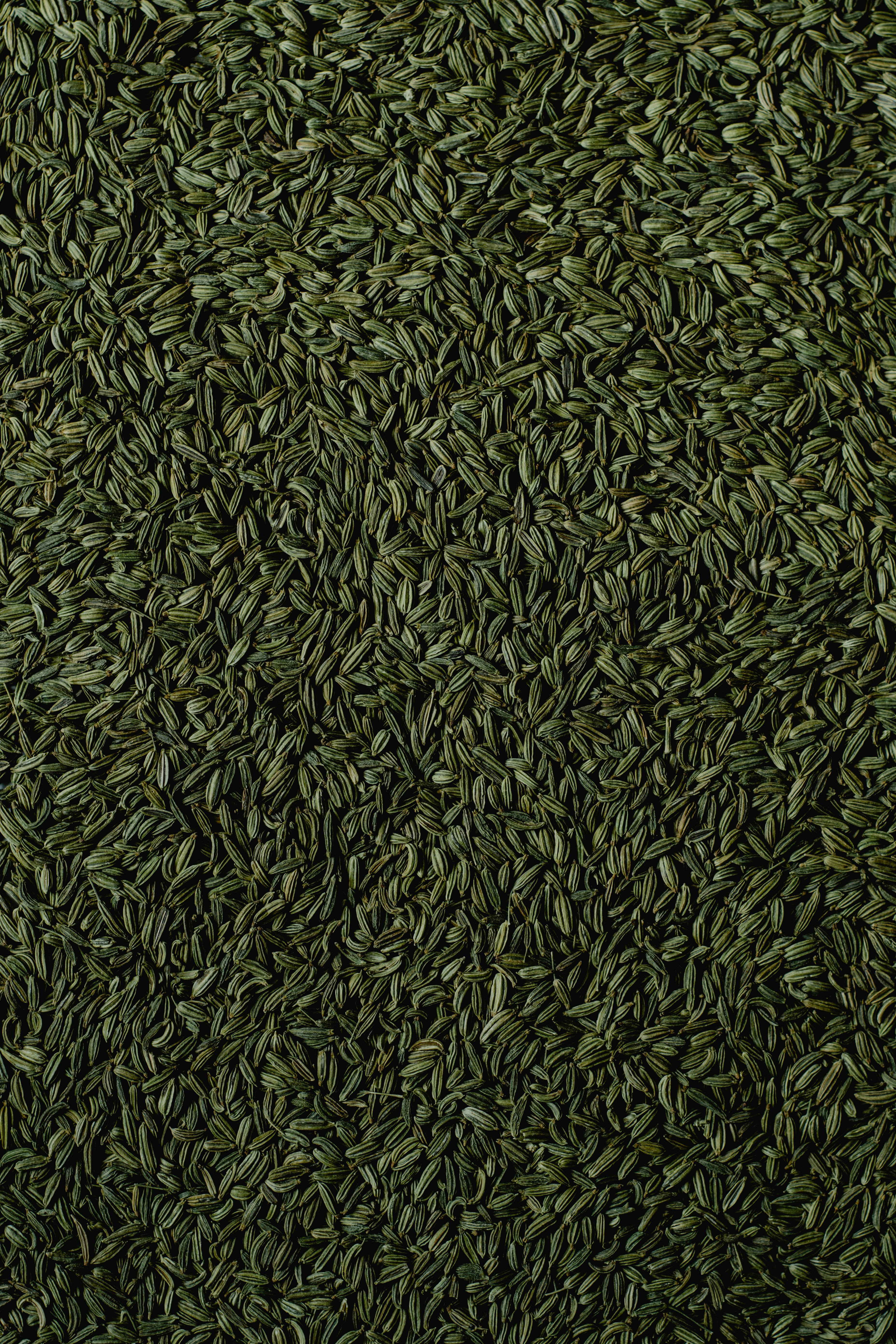
Foeniculum vulgare
Fennel
Cool, sweet seeds that aid every meal
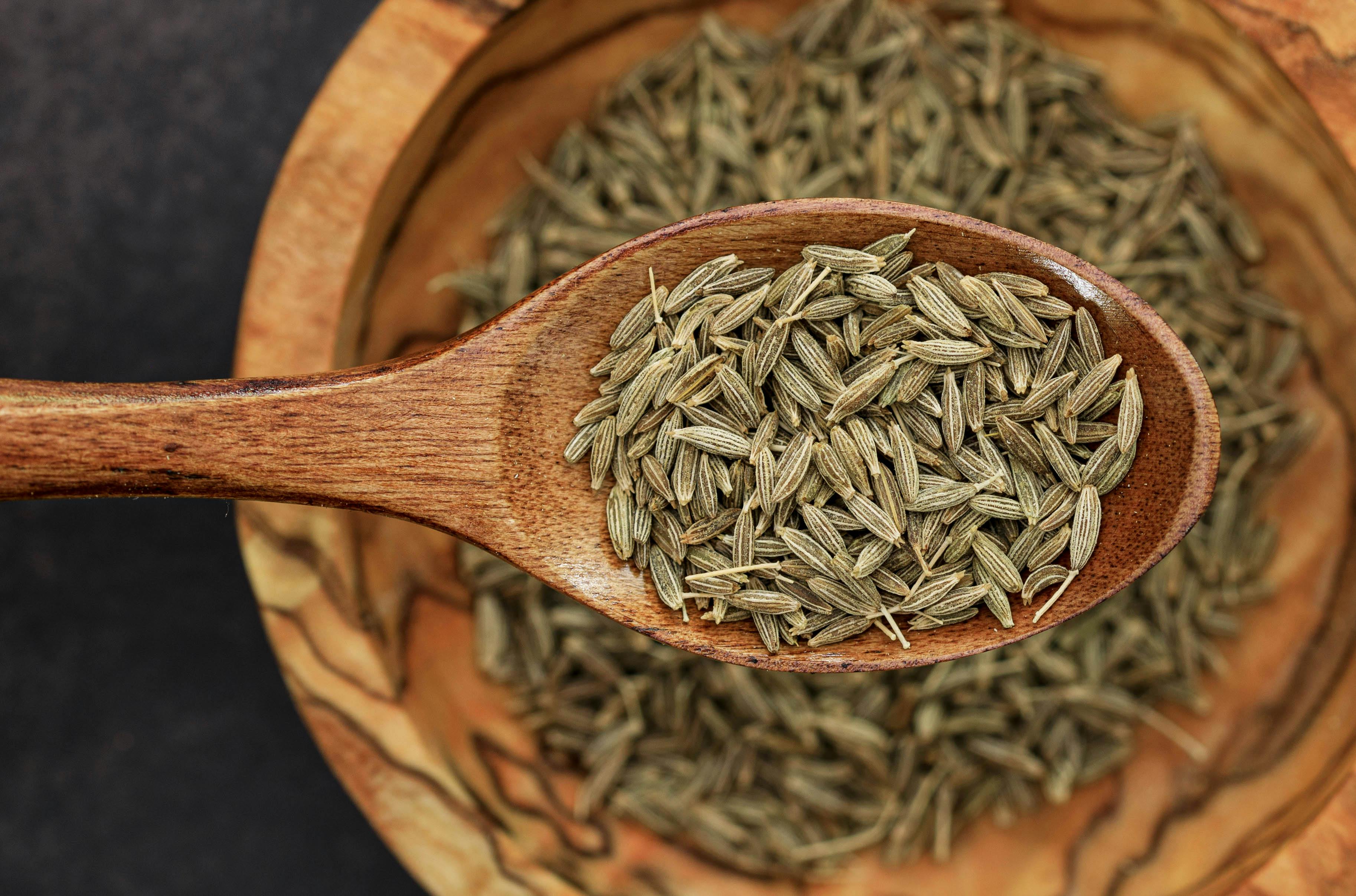
Cuminum cyminum
Cumin
The earthy warmth of every great curry
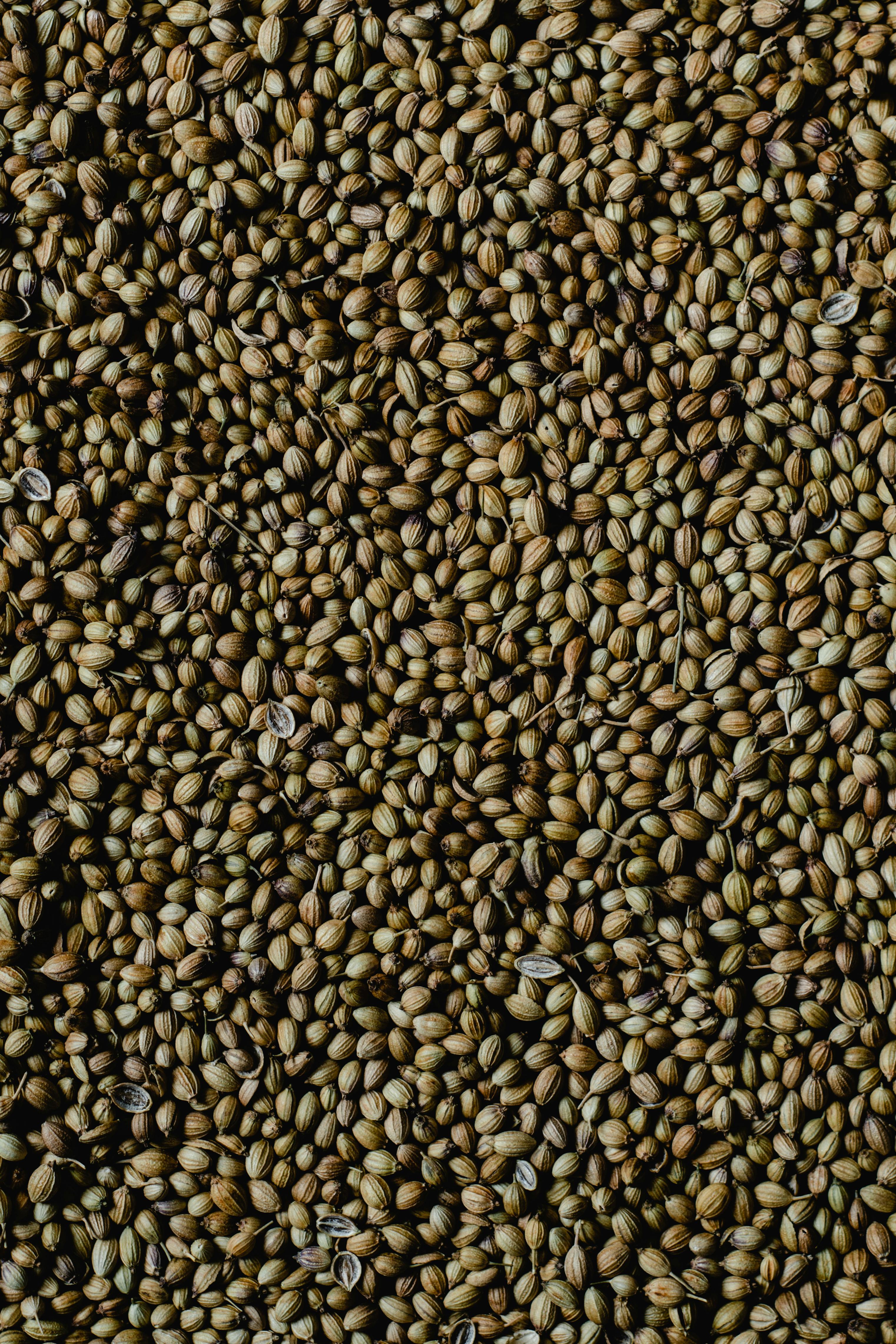
Coriandrum sativum
Coriander
Citrusy seed of the ancient world
Community Reviews
Share your Fenugreek experience
Loading reviews...